
Chicago is widely regarded as the world capital of blues harmonica, producing and attracting some of the greatest players in the instrument’s history. As African American musicians migrated from the South during the Great Migration, they brought the Delta blues to Chicago, where the harmonica evolved into a louder, amplified instrument capable of cutting through electric bands. This new sound became a defining feature of Chicago blues and influenced generations of musicians around the world.
One of the city’s most important harmonica players was Little Walter, whose innovative use of a microphone and amplifier revolutionized blues harmonica. After joining Muddy Waters’ band in the late 1940s, Little Walter developed a powerful, saxophone-like tone and became one of the first harmonica players to achieve major commercial success as a solo artist. His recordings, including “Juke,” remain landmarks in blues history and continue to inspire harmonica players today.
Another Chicago legend was James Cotton, who spent decades performing in the city after replacing Little Walter in Muddy Waters’ band. Known for his energetic stage presence and powerful playing, Cotton blended traditional blues with modern influences and became one of the most respected harmonica players of the twentieth century. Junior Wells, who grew up in Chicago after moving from Memphis as a child, also became a cornerstone of the city’s blues scene. His long partnership with guitarist Buddy Guy produced some of the most influential Chicago blues recordings ever made, and his soulful harmonica style helped define the West Side blues sound.
Several other harmonica masters left an enduring mark on Chicago music. Carey Bell became known for his technical skill and traditional blues style, while Big Walter Horton was admired for his rich tone and expressive phrasing, making him one of the most respected session musicians in Chicago blues. Billy Boy Arnold recorded for the legendary Vee-Jay Records and remains an important figure in the city’s postwar blues movement. George “Harmonica” Smith, although born outside Illinois, spent significant time performing in Chicago and helped shape the amplified blues harmonica tradition before moving west.
Chicago’s harmonica tradition continues through modern performers such as Sugar Blue, whose virtuoso technique earned worldwide recognition after playing on the Rolling Stones’ hit “Miss You.” Billy Branch has carried the city’s blues heritage into the twenty-first century through his performances, recordings, and educational work, while Corky Siegel helped bridge blues and classical music with his innovative approach to the harmonica. Together, these musicians have made Chicago the undisputed center of blues harmonica, ensuring that the city’s distinctive sound continues to influence blues, rock, jazz, and roots musicians across the globe.
Harmonica Players Tour Information -> PDF files
20 entries so far…
Willie “Little Willie” Anderson
Nathaniel Armstrong, Jr.
Carey Bell
Wright “Birmingham Jones” Birmingham
Leon “Big Leon” Brooks
Lester “Mad Dog” Davenport
“Good Rockin'” Charles Edwards
Willie “Little Willie” Foster
William McKinley “Jazz” Gillum
Mark R. Hannon “Blues Cannon”
Walter “Shakey” Horton
James Edwards “Middle Walter” Jones
Marion Walter Jacobs “Little Walter”
Hosea “Sonny Boy” McGhee
Robert Lee “Bob” Myers
Gary Alan Primich
Alex “Easy Baby” Randal
Tenner “Playboy” “Coot” Venson
“Junior Wells” Amos Blakemore
Golden “Big” Wheeler
JAMES A. “JIMMY” BERTRAND (1900-1960)
Holy Sepulchre Catholic Cemetery
6001 W. 111th Street
Alsip, IL 60803
Sec. 9, Blk. 8, Lot 38, Grave 1 (unmarked per cemetery staff)
Jazz & Blues Drummer
Jimmy Bertrand was an influential jazz and blues percussionist whose career was closely tied to the development of the Chicago jazz scene during the 1920s and 1930s. Born in Biloxi, Mississippi, he moved to Chicago in 1913, where he studied percussion and began performing in theater orchestras before joining Erskine Tate’s Vendome Orchestra in 1918. Over the following decade, he established himself as one of the city’s leading drummers and washboard players, performing and recording with many of the era’s most important musicians, including Louis Armstrong, Johnny Dodds, Blind Blake, Ma Rainey, Tiny Parham, and Eddie South.
In addition to his work as a sideman, Bertrand led his own ensemble, Jimmy Bertrand’s Washboard Wizards, which featured notable collaborators such as Louis Armstrong and Jimmy Dodds. His recordings showcased not only his drumming but also his skill on the washboard, xylophone, and other percussion instruments, reflecting the versatility that made him a sought-after performer in both jazz and blues sessions.
Bertrand was equally significant as a teacher. He trained several future jazz greats, including Lionel Hampton, Big Sid Catlett, and Wallace Bishop. Hampton later referred to Bertrand as his “original idol,” highlighting the lasting influence Bertrand had on the next generation of percussionists. Although he continued leading bands into the early 1940s, he left professional music around 1944 to work in a Chicago meat-packing plant, making only occasional musical appearances thereafter. While he never achieved the fame of many of his contemporaries, Bertrand’s recordings, performances, and teaching established him as a foundational figure in early Chicago jazz and blues.
James A. “Jimmy” Bertrand -> Wikipedia
WILLIE “LITTLE WILLIE” ANDERSON (1921-1991) – GRAVE
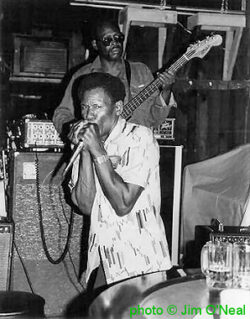
Little Willie Anderson -> Earwig Music
BLUES HARMONICA
Little Willie was heavily influenced by Little Walter.
[Lincoln Cemetery, Blue Island – 41°40’03.8″N 87°42’01.7″W]
CAREY BELL (1936-2007) – GRAVE
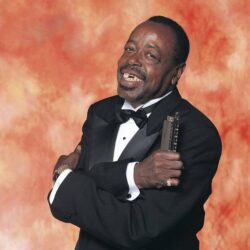
BLUES HARMONICA
Carey Bell was a Chicago Blues harmonica player.
[Lincoln Cemetery, Blue Island – 41°40’48.5″N 87°41’29.0″W]